Google Reviews
|
|
5 years ago
★★★★★
A gorgeous peice of local history. Dont be a horrible person and leave trash behind. There is already too much of it already. However its beauty is still undeniable. Be very safe as this is not meant to be climbed on or around and your risk seriously hurting yourself. Be careful for the water especially in winter as you may fall in.
4 years ago
★★★☆☆
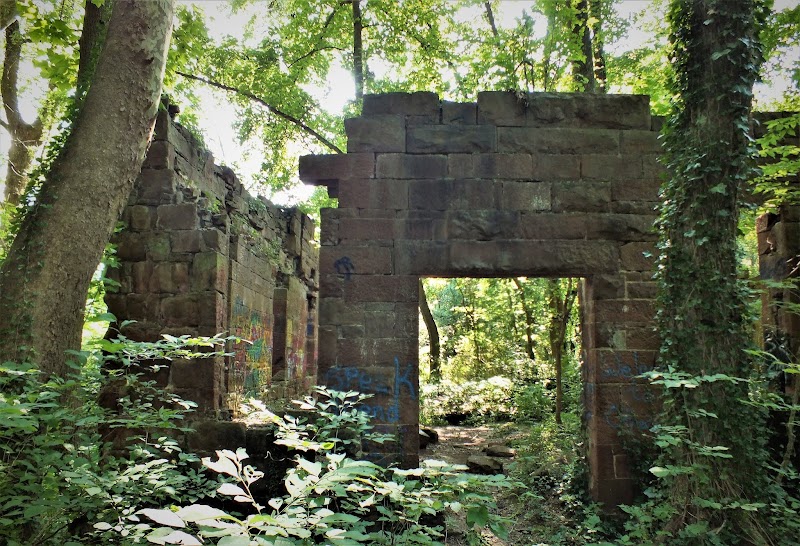
There are some ruins left that you can wander through. Of course they are graffitied but that give your photos color....so not complaining. Ruins are a bit overgrown so where good shoes and walk carefully. There are just main walls of structures, no artifacts, but still a cool little place to explore and read the history about. If you are near lock 24 you can walk to the ruins in a few minutes.
5 years ago
★☆☆☆☆
What a shame to find this National Historical Sight in this condition. Covered in graffiti and overgrown left to fall to the ground, defaced and discarded like trash. I visited a number of years ago and it wasn’t like this. There was once a placard with historical information. Whom ever Was responsible for preserving this landmark must have forgotten it.
As an artist traveling from place to place to find and paint interesting local sights, I am seriously disappointed! Compare what we neglect to other countries that persevere ruins for hundreds of years. What will we have left? A pile of sticks that eventually get sold For development. Heartbreaking.
As an artist traveling from place to place to find and paint interesting local sights, I am seriously disappointed! Compare what we neglect to other countries that persevere ruins for hundreds of years. What will we have left? A pile of sticks that eventually get sold For development. Heartbreaking.
3 years ago
★★★★★
Cool ruins of a quarry from the late 1700s and stonecutting mill from early 1800s. To see the ruins go upstream from Seneca Creek Aqueduct a hundred yards until you come to a trail on your right. Follow trail for five minutes. There are two paths once you're there, one more cleared than the other.
5 years ago
★★★★★
Haunted! Beware!!
There is a legend about the Seneca Stone Cutting Mill, the oldest stone cutting mill in the United States. The mill was used to cut and dress stone from nearby quarries and red sandstone cut here was used to build the Seneca Aqueduct, the Smithsonian Institution's "Castle", and the Washington Monument (used as a backing stone). The story behind it is that a family of three used to live nearby: a father, mother, and their four-year-old son. The mother apparently went crazy and drowned her son in the C&O canal. When the father found his son dead, he attacked the mother, and the fight ended with the mother chopping the fathers head off with an ax. It is said that she hid his body beneath the floorboards of the abandoned mill, then hung herself from its rafters.
The legend suggests that if you go up into the mill and call the woman (Abigail) degrading names, she will appear to you.
There is a legend about the Seneca Stone Cutting Mill, the oldest stone cutting mill in the United States. The mill was used to cut and dress stone from nearby quarries and red sandstone cut here was used to build the Seneca Aqueduct, the Smithsonian Institution's "Castle", and the Washington Monument (used as a backing stone). The story behind it is that a family of three used to live nearby: a father, mother, and their four-year-old son. The mother apparently went crazy and drowned her son in the C&O canal. When the father found his son dead, he attacked the mother, and the fight ended with the mother chopping the fathers head off with an ax. It is said that she hid his body beneath the floorboards of the abandoned mill, then hung herself from its rafters.
The legend suggests that if you go up into the mill and call the woman (Abigail) degrading names, she will appear to you.
Reviews powered by
